Culture
Lao Culture on Stage: The Nop, the Sinh and the Drums
A short guide to the Lao traditions you will see at Dragon's Glow, from the nop greeting and the hand-woven sinh to the sound of Lao drums and the Naga.
Much of what you see on stage at Dragon’s Glow comes from everyday Lao life and festivals. Knowing a little about it makes the evening richer, and it will help you feel at home anywhere in Laos.
The nop: a greeting with palms together
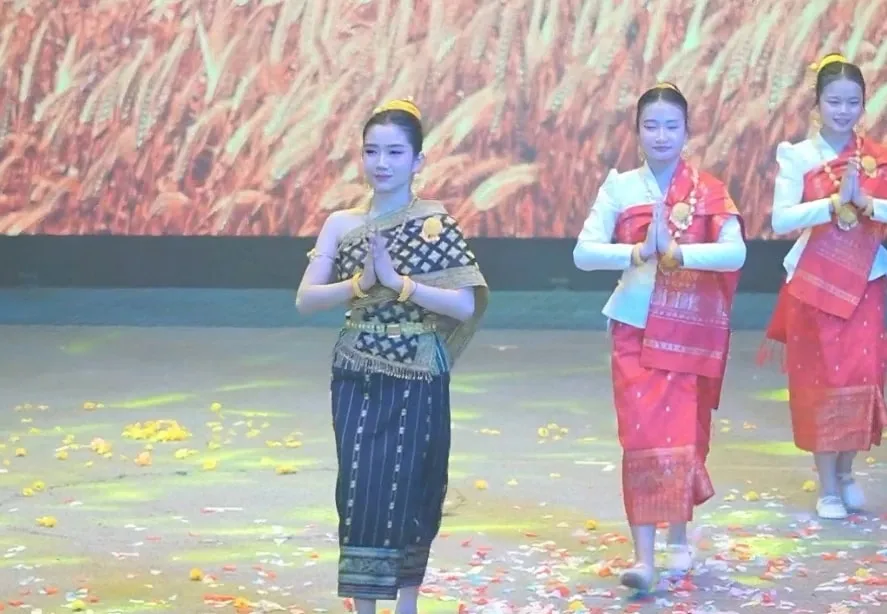
The nop is the Lao greeting: palms pressed together near the chest or face, with a slight bow of the head. It usually comes with sabaidee, “hello”. The higher the hands, the more respect it shows, so people raise them higher for elders and monks.
You may see dancers greet the audience this way. If someone offers you a nop, return it with a smile. Nobody expects visitors to get it perfect, and the gesture is always appreciated.
The sinh: stories woven in silk
The sinh is the traditional Lao skirt, a length of hand-woven silk or cotton wrapped around the waist. The patterned band along the hem is the weaver’s signature, and its motifs can tell you which region or community a design comes from. Women wear the sinh to the temple, to weddings and to festivals, and dancers wear their finest on stage.
Weaving runs deep in Lao life: in 2023, UNESCO recognised the traditional craft of Naga motif weaving in Lao communities as part of the world’s living heritage.
The drums and the khaen
Drums are the heartbeat of a Lao festival, or boun. They lead processions, mark ceremonies and call people together to celebrate, and at Dragon’s Glow they set the rhythm of the whole evening.
The other sound of Laos is the khaen, a mouth organ made of bamboo pipes. Khaen music was added to UNESCO’s list of the world’s intangible cultural heritage in 2017.
The Naga: guardian of the river
The Naga is a great serpent who lives in the rivers and protects the people who depend on them. You will see Naga curling along temple staircases and rooftops across Laos. Each year at the end of Buddhist Lent, many people watch the Mekong for “Naga fireballs”, glowing lights said to rise from the water.
In Lao art, the Naga is a close cousin of the dragon of Chinese tradition. Both are water beings tied to rain, rivers and good fortune, and both stand for protection and prosperity.
A little etiquette goes a long way
- Don’t touch anyone’s head, which is considered the most sacred part of the body.
- Avoid pointing your feet at people, or at images of the Buddha.
- Cover your shoulders and knees when visiting a temple.
- Ask before photographing people up close.
See these traditions come together on stage: reserve your table, or read our guide to spending an evening in Vang Vieng.